NAP Consistency: Why It Matters for Local SEO and How to Fix Name-Address-Phone Mismatches
By Search Scale AI Team · April 25, 2026 · 11 min read
Quick Answer
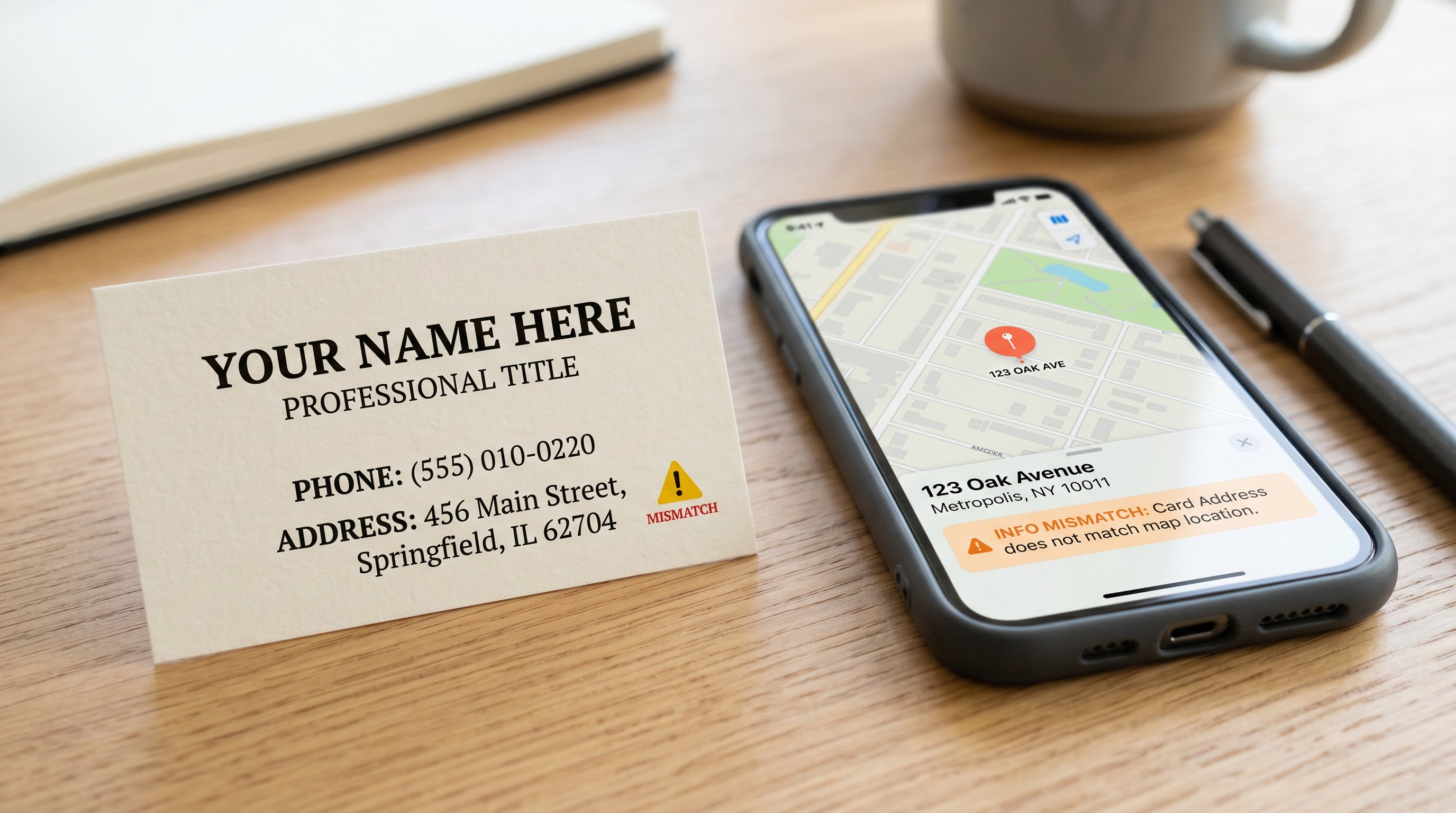
NAP consistency matters because Google and customers rely on matching name, address, and phone data to confirm that your listings all refer to the same business. To fix NAP issues, start with a canonical NAP, remove duplicates, correct the most visible directories first, then monitor regularly so mismatches do not return.
Key Takeaways
- Define one canonical NAP format and use it everywhere.
- Duplicates are usually more harmful than missing citations.
- Fix Google Business Profile, Apple, and Bing first, then core directories.
- Handle suite numbers, abbreviations, and tracking numbers carefully.
- Update your website contact page to match your canonical NAP.
- Track changes in a spreadsheet so you can verify updates propagated.
- Ongoing monitoring prevents rankings from slipping back over time.
What NAP consistency means in local SEO
NAP stands for name, address, and phone number. NAP consistency means those three data points match across your website, your Google Business Profile, and every directory where your business is listed. In 2026, consistency is one of the fastest ways to remove friction from local SEO because it reduces uncertainty about your business entity.
If you are new to local SEO systems, start with the fundamentals in How to Show Up on the First Page of Google in 2026 and then apply NAP cleanup as a foundational project.
Why NAP mismatches hurt rankings and conversions
NAP mismatches harm performance in two ways. First, they make it harder for search engines to trust that your citations represent the same business. Second, they create customer confusion - wrong phone numbers lead to missed calls, and wrong addresses lead to negative reviews and refunds.
When NAP problems compound, the result is ranking volatility in Google Maps and fewer conversions from your best keywords. If you rely on Maps visibility, pair NAP cleanup with a map pack strategy like How St. Augustine Businesses Can Dominate Google Maps in 2026.
Step-by-step: how to audit your NAP consistency
A good NAP audit is a structured inventory, not a quick search. You want to identify every place customers or data providers might reference your business.
Step 1: Write your canonical NAP and stick to it
Pick the exact business name formatting (including LLC or not), the exact address formatting (suite vs. ste, street vs. st), and your primary local phone number. Use this exact formatting on your website first, including your footer, contact page, and schema markup.
Step 2: Gather all existing listings
Search your business name, phone number, and address variations. Also search old phone numbers and old addresses if you have moved. Log every listing in a spreadsheet with the listing URL and the mismatch type.
Many businesses discover old web properties still ranking, especially if they have redesigned their site. If you are rebuilding, coordinate with Web Design so your new site keeps consistent NAP and the correct contact details.
Step 3: Classify each mismatch so you can fix it efficiently
- Minor formatting differences: Ave vs Avenue, Suite vs Ste.
- Moderate conflicts: different phone numbers, different suite numbers, different landing pages.
- Major conflicts: wrong address, wrong city, wrong business name, or duplicate listings.
How to fix NAP consistency issues (the order matters)
Fix NAP issues in the order of influence. Start with the platforms that are most visible and most trusted, then work outward. This prevents you from pushing the wrong data into the ecosystem.
1) Fix your website first
Your website is your canonical source. Update your footer, contact page, and any location pages. If you have multiple offices, make sure each location page has distinct NAP and that your main brand NAP is clear.
2) Fix Google Business Profile and other primary profiles
Update Google Business Profile, Apple Business Connect, and Bing Places. Confirm categories, hours, and website URL. These are Tier 1 sources that often influence how your business is represented elsewhere.
3) Remove duplicates before correcting everything else
Duplicates create ongoing confusion. If you have two listings on the same platform, merge or remove the incorrect one before you update the correct listing. Otherwise, you might fix one and the other continues to spread the wrong data.
4) Correct core directories and data ecosystems
Focus on the directories that appear in your branded searches and the directories that rank for your category. For a broader citation strategy, pair this process with our local citation building guide.
5) Update niche and local citations
Finally, update industry profiles, local business directories, chambers, and sponsorship listings. These often drive referral leads in addition to local SEO value.
Special cases: suite numbers, service-area businesses, and multi-location brands
Suite numbers
Suite numbers are one of the most common sources of mismatch. Decide on a consistent format (for example, Suite 200) and use it across your website and citations. If some platforms do not support suites cleanly, use the closest consistent format rather than inventing new versions.
Service-area businesses
If you hide your address in Google Business Profile, you still need consistent service area details and consistent phone information. Follow platform rules and avoid listing fake addresses, which can trigger suspensions.
Multi-location brands
For multi-location businesses, each location needs its own listing and distinct NAP. Create a location page for each office and link citations to the correct location page. Location pages like St. Augustine and Tampa help clarify your footprint when implemented correctly.
How to prevent NAP problems from returning
NAP issues return because platforms accept user edits, data providers refresh, and businesses change details without updating every profile. Create a monthly monitoring system and assign ownership so updates are not forgotten.
- Maintain a master NAP document.
- Keep logins in a shared credential manager.
- Track every listing URL in a spreadsheet.
- Review top citations monthly and full footprint quarterly.
How NAP consistency connects to reviews, content, and authority
Once NAP is clean, you can focus on higher leverage growth: earning reviews, publishing helpful local content, and building local backlinks. For content systems, see Content Marketing and SEO for St. Augustine Businesses in 2026. For authority building, see How to Build Local Backlinks for Your St. Augustine Business.
If you want help executing a full local SEO program, explore SEO and AI SEO to combine consistent data with scalable content and optimization.
Frequently Asked Questions
What counts as a NAP mismatch?
Any difference in business name, address, or phone data across your website and listings counts. Even small variations can matter if they create multiple competing versions of your identity.
Are small formatting differences a big problem?
Usually they are less harmful than duplicates or wrong phone numbers, but consistent formatting helps reduce ambiguity. Prioritize big conflicts first, then standardize formatting over time.
Should I add keywords to my business name in listings?
No. Adding keywords to your business name violates the guidelines of many platforms and increases mismatch risk. Use categories, services, and content to target keywords instead.
How do I fix a wrong phone number on an unmanaged listing?
Claim the listing where possible, request edits through the platform, and document the request. If you cannot claim it, build stronger correct listings on trusted platforms so the ecosystem favors the right data.
How often should I re-check my citations?
Check your top profiles monthly and do a deeper scan quarterly. Also re-check after any move, rebrand, phone change, or website redesign.
Will fixing NAP consistency guarantee higher rankings?
It is not a guarantee, but it removes a common barrier. Once trust is higher, your other local SEO work - on-page, reviews, and authority - tends to perform more consistently.
Can NAP issues cause a Google Business Profile suspension?
NAP inconsistencies alone do not always cause suspensions, but severe conflicts, fake addresses, and misleading information can trigger verification issues or policy enforcement.
NAP consistency problems you should prioritize first
Not all inconsistencies carry the same risk. When you prioritize, focus on the mismatches that can cause duplicate entities, missed calls, or wrong-location confusion.
Priority 1: wrong phone numbers and tracking numbers used everywhere
If different listings show different phone numbers, customers call the wrong line and Google struggles to reconcile identity. Decide on a single primary number that will appear on your website and your primary listings. If you use call tracking, use it on a limited set of placements and keep the primary number consistent on the sources that matter most.
Priority 2: old addresses, suite conflicts, and building variations
Address mismatches are common in shared buildings and multi-tenant complexes. Suite numbers should be formatted consistently (for example, Suite 200 rather than Ste 200 on some sites and #200 on others). If your address changed, keep a transition plan: update primary profiles first, then directories, then niche citations.
Priority 3: duplicate listings and merged profiles
Duplicates are more harmful than missing citations. When two listings exist for the same business, reviews and signals can split. Always remove or merge duplicates before you correct minor formatting differences.
How to fix NAP issues on the platforms that matter most
Different platforms have different workflows and timelines for changes. The safest approach is to document each change request and verify the update after it goes live.
- Google Business Profile: update NAP, categories, and hours, then watch for pending edits. If Google suggests edits, approve or reject quickly so the listing does not drift.
- Apple Business Connect: keep address and category accurate because Apple Maps data is used by many iOS users.
- Bing Places: verify your NAP matches Google and your website.
- Core directories: claim or request edits and keep a log of tickets and confirmations.
Tools and documentation: how to make NAP cleanup manageable
A NAP cleanup project becomes manageable when you treat it like operations. Use a simple documentation system so you can track progress and avoid rework.
- Create a master NAP document with the exact formatting rules.
- Create a listing inventory spreadsheet with URL, login owner, and status.
- Capture screenshots of before and after for critical listings.
- Record the date of each update, because some platforms take weeks to refresh.
How NAP consistency supports AI-driven search and SGE-style results
As search results increasingly summarize answers and recommend businesses, consistent entity data matters even more. When your business information is consistent, it is easier for systems to confidently include your business details in summaries, map results, and voice responses. That is why NAP cleanup pairs well with SGE Optimization and with a strong content program supported by AI SEO.
Examples of NAP standardization rules you can adopt
- Choose "Street" or "St" and use it consistently.
- Choose "Suite" or "Ste" and use it consistently.
- Use the same primary phone format everywhere (for example, (904) 555-1212).
- Use one website URL version (https, with or without trailing slash).
- Use one business name version without keyword stuffing.
How to handle NAP consistency during merges, acquisitions, and shared locations
In 2026, many local businesses expand by acquiring competitors or moving into shared office spaces. These situations create NAP complexity because legacy listings continue to exist and customers still search for old brand names.
Mergers and acquisitions
If you acquire another business, decide whether you will keep the old brand, redirect it, or fully rebrand it. Keep the old listing live only if it represents a real ongoing entity. Otherwise, merge reviews where the platform allows, update the listing to the new name, and use 301 redirects on the website so users and search engines arrive at the correct pages.
Shared locations and co-working spaces
Shared locations can create accidental duplicates when multiple businesses share the same street address. Make sure your suite number is correct and consistent, and avoid using generic building directory names as part of your business name. If your suite is not supported on a platform, add clarifying details in the description rather than inventing a new address format.
Practitioner listings vs. business listings
Some directories create practitioner profiles that include phone numbers that differ from the main office line. Align these by listing the main office number as the primary phone when possible, then include the practitioner extension or contact method in the description. This keeps the entity graph cleaner and reduces missed calls.
Operational checklist: keeping NAP consistent across marketing channels
NAP problems often come from internal teams making changes without a single owner. Use this checklist so your sales, marketing, and operations teams do not accidentally create new inconsistencies.
- Before launching ads: confirm the landing page shows the canonical NAP and that call tracking is implemented without changing your primary citations.
- Before changing phone systems: plan a transition window and update Tier 1 sources on day one.
- Before moving offices: update the website and primary listings first, then directories, then niche citations.
- Before rebranding: update your website branding, then primary listings, then fix core citations, and only then build new niche citations.
Internal linking and site structure tips that reinforce NAP consistency
NAP consistency is not only off-site. Your internal linking and page structure should reinforce your location and services. A strong structure also improves crawlability and user flow from map pack traffic.
- Link from your homepage to your main service pages like SEO and PPC Management.
- Link from your service pages to your primary location page when relevant, such as St. Augustine.
- Use consistent NAP in the footer so it appears on all pages, and keep the same formatting in your contact page.